Combien rapporte vraiment un stream en 2026 ? (Spotify, Apple Music, Deezer)

Un stream rapporte entre 0,1 et 0,9 centime d’euro en 2026, selon la plateforme et le pays de l’auditeur. Pour 100 000 streams répartis de façon typique entre Spotify, Apple Music et Deezer, un artiste indépendant touche environ 380 à 480 € de part master, et plutôt 500 à 650 € une fois les droits d’auteur SACEM et les droits voisins collectés.
Tu viens de dépasser les 10 000 streams sur Spotify. Tu ouvres ton tableau de bord et tu vois… 35 euros. Peut-être moins. Tu te demandes si c’est normal, si tu te fais avoir, si toutes les plateformes payent aussi peu. La réponse courte : oui, le streaming paye peu au stream. Mais la réponse longue est beaucoup plus nuancée, et c’est précisément ce qu’on va décortiquer dans cet article.
Combien rapporte réellement un stream en 2026 ? Pourquoi Spotify paye moins qu’Apple Music ? Où va l’argent entre la plateforme et toi ? Et surtout : comment maximiser tes revenus en tant qu’artiste indépendant, sans label, sans intermédiaire inutile ?
On te donne les vrais chiffres, plateforme par plateforme, avec des simulations concrètes. Et on t’explique pourquoi le choix de ton distributeur et la collecte de tes droits changent tout.
Combien paye chaque plateforme par stream en 2026
En 2026, un stream rapporte en moyenne entre 0,1 et 0,9 centime d’euro selon la plateforme : environ 0,35 centime sur Spotify, 0,70 sur Apple Music, 0,50 sur Deezer et 0,90 sur Tidal. Pour 1 million de streams sur Spotify, compte environ 3 500 € de part master, avant commission du distributeur.
🧮 Calcule tes revenus exacts avec notre calculateur de revenus streaming gratuit : entre tes streams par plateforme et vois la part master, la part interprète et les droits d’auteur SACEM.
Commençons par ce qui t’intéresse le plus : les chiffres. Voici les tarifs moyens estimés par stream pour un artiste indépendant en 2026, basés sur les données consolidées de 2025 et les tendances du premier trimestre 2026.
| Plateforme | Tarif moyen / stream | Modèle |
|---|---|---|
| Tidal | ~0,90 centime | Pro-rata, abonnement premium élevé |
| Apple Music | ~0,70 centime | Pro-rata, 100 % payant |
| Amazon Music | ~0,60 centime | Pro-rata, intégré à Prime |
| Deezer | ~0,50 centime | UCPS (centré utilisateur) depuis 2024 |
| Spotify | ~0,35 centime | Pro-rata, freemium dominant |
| YouTube Music | ~0,20 centime | Pro-rata, mix payant/pub |
| YouTube (vidéo) | ~0,06 centime | Pub uniquement (Content ID) |
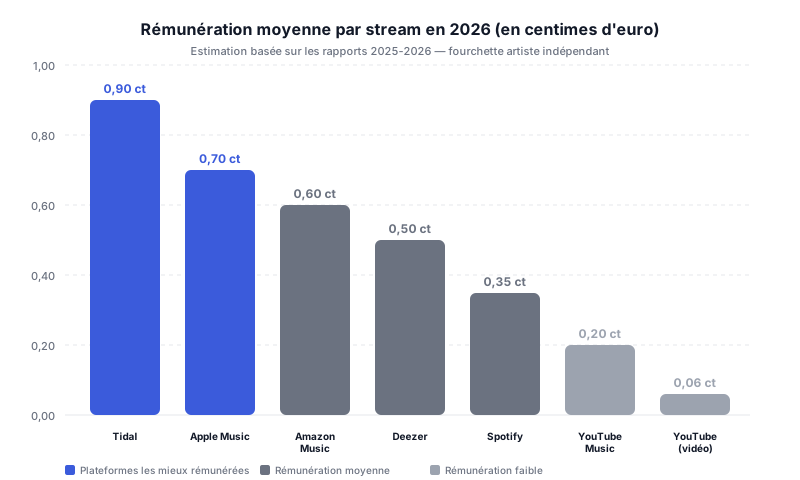
Rémunération moyenne par stream en 2026, les écarts sont considérables d’une plateforme à l’autre.
À retenir : Un stream sur Tidal rapporte environ 15 fois plus qu’un stream sur YouTube vidéo. Mais Tidal représente une infime part du marché. La majorité de tes streams viendront probablement de Spotify et Apple Music.
Ce que ces chiffres signifient concrètement
Pour que tu visualises : avec 100 000 streams répartis équitablement entre Spotify et Apple Music, tu obtiendrais environ 525 euros. Pas de quoi vivre, mais pas négligeable non plus, surtout si tu multiplies les titres et que tu cumules avec d’autres sources de revenus.
Le problème, c’est que ces chiffres sont des moyennes. Ton tarif réel par stream dépend de beaucoup de facteurs qu’on va détailler maintenant.
Combien rapporte 1 million de streams en 2026
1 million de streams sur Spotify rapporte environ 3 500 € de part master en 2026, avant la commission de ton distributeur. Le même million rapporte environ 7 000 € sur Apple Music, 5 000 € sur Deezer et 2 000 € sur YouTube Music. Si tu es aussi auteur-compositeur, ajoute environ 500 à 1 200 € de droits d’auteur par million de streams (≈ 1 000 € si les écoutes sont françaises et payantes), à partager entre auteurs, compositeurs et éditeur.
| Nombre de streams | Spotify | Apple Music | Deezer | YouTube Music |
|---|---|---|---|---|
| 1 000 | ~3,50 € | ~7 € | ~5 € | ~2 € |
| 10 000 | ~35 € | ~70 € | ~50 € | ~20 € |
| 100 000 | ~350 € | ~700 € | ~500 € | ~200 € |
| 1 million | ~3 500 € | ~7 000 € | ~5 000 € | ~2 000 € |
| 10 millions | ~35 000 € | ~70 000 € | ~50 000 € | ~20 000 € |
| 1 milliard | ~3,5 M€ | ~7 M€ | ~5 M€ | ~2 M€ |
Part master brute, sur la base des tarifs moyens par stream ci-dessus. Le montant réel varie selon le pays d’écoute et la part d’abonnés payants.
Trois précisions pour lire ce tableau correctement :
- Ces montants vont au détenteur du master. Si tu es en autoproduction avec un distributeur, c’est toi. Si tu es signé en contrat d’artiste, le label encaisse et ne te reverse que ta royalty, souvent 15 à 25 %. C’est pour ça qu’un titre à 1 milliard de streams ne rend pas son interprète multimillionnaire à lui seul.
- Spotify ne paie rien sous 1 000 streams par an et par titre. Les premières lignes du tableau ne concernent donc que les titres qui franchissent ce seuil.
- La commission du distributeur se retire de ces montants : de 0 % à 15 % selon le contrat (voir l’impact de la commission plus bas).
🧮 Pour ton propre catalogue, entre tes chiffres réels dans le calculateur de revenus streaming : il ventile automatiquement part master, part interprète et droits SACEM.
Pourquoi les montants varient autant
Tu as peut-être remarqué que les chiffres que tu vois dans tes rapports de distribution ne correspondent jamais exactement aux moyennes publiées. C’est normal. Voici les principales raisons.
Le modèle économique de la plateforme
Spotify fonctionne en freemium : une grande partie de ses utilisateurs écoutent gratuitement avec de la publicité. Les revenus publicitaires par stream sont beaucoup plus faibles que les revenus d’un abonné payant. Résultat : le tarif moyen par stream est tiré vers le bas.
Apple Music, à l’inverse, n’a pas d’offre gratuite. Chaque stream provient d’un abonné payant à 10,99 €/mois. Le pool de revenus à distribuer est proportionnellement plus élevé.
Deezer a adopté en 2024 le modèle UCPS (User Centric Payment System) : l’abonnement de chaque utilisateur est réparti uniquement entre les artistes qu’il a écoutés, et non dans un pot commun global. Cela avantage les artistes avec une vraie fanbase fidèle plutôt que ceux qui accumulent des écoutes passives via des playlists algorithmiques.
Le pays d’écoute
Un stream en Norvège rapporte beaucoup plus qu’un stream en Inde. Pourquoi ? Parce que le prix de l’abonnement varie selon les pays, et le pool de revenus est proportionnel. Un abonnement Spotify coûte environ 12 € en Scandinavie contre 1,50 € en Inde.
Si ton audience est principalement française, tu te situes dans une fourchette intermédiaire à haute. Si tu fais beaucoup de streams en Amérique latine ou en Asie du Sud-Est, tes revenus par stream seront mécaniquement plus faibles.
Le type d’abonnement de l’auditeur
Un stream d’un abonné Premium individuel rapporte plus qu’un stream d’un utilisateur sur un plan famille (où 6 personnes partagent le même abonnement) ou qu’un utilisateur du plan gratuit.
Ta part du gâteau
Le chiffre que tu vois dans tes rapports, c’est ta part master (ou part producteur). Si tu es signé en label, celui-ci prend 50 à 85 % avant de te reverser le reste. Si tu es indépendant et que tu distribues via un distributeur qui prend une commission, il faut aussi la déduire.
À retenir : Le tarif “officiel” par stream n’existe pas. C’est une moyenne qui dépend du pays d’écoute, du type d’abonné, du modèle de la plateforme et de ta chaîne de distribution. Deux artistes avec le même nombre de streams peuvent avoir des revenus très différents.
Où va l’argent d’un stream : le circuit complet
Pour comprendre pourquoi tu touches si peu, il faut suivre le trajet d’un euro dépensé par un abonné.
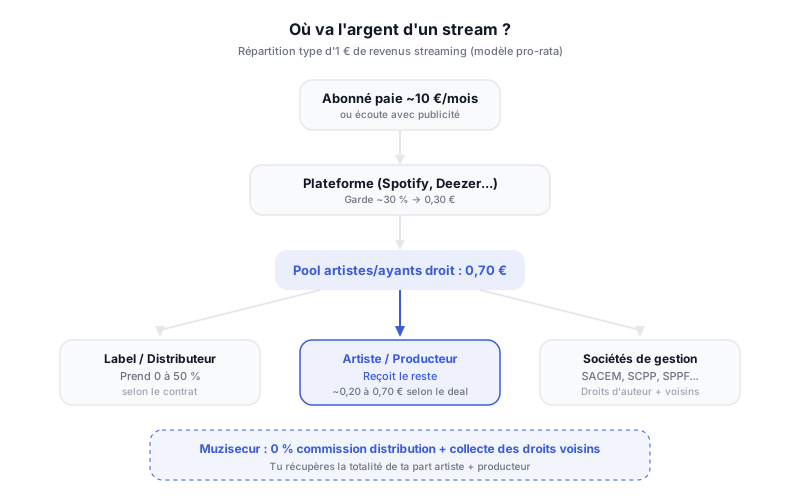
Le circuit complet de l’argent du streaming, de l’abonné à l’artiste.
Étape 1 : la plateforme garde sa part
Spotify, Apple Music, Deezer et les autres gardent environ 30 % des revenus générés. C’est leur marge pour financer l’infrastructure technique, les algorithmes, le marketing, les bureaux, les salaires. Sur 10 € d’abonnement, il reste donc environ 7 € dans le pool artistes.
Étape 2 : le pool est réparti entre tous les artistes
Dans le modèle pro-rata (Spotify, Apple Music, Tidal), ces 7 € sont mis dans un pot commun mondial, puis répartis proportionnellement au nombre de streams de chaque artiste. Si Drake représente 2 % des écoutes mondiales, il touche 2 % du pot.
Dans le modèle UCPS (Deezer), les 7 € de ton abonnement vont uniquement aux artistes que tu as écoutés. Si tu n’écoutes que 3 artistes ce mois-ci, ils se partagent tes 7 €.
Étape 3 : le label ou distributeur prend sa part
Si tu es en contrat artiste avec un label, celui-ci touche la part master et te reverse un pourcentage (souvent 15 à 30 % seulement). Si tu es indépendant, ton distributeur peut prélever de 0 à 15 % selon le service choisi.
Étape 4 : les droits d’auteur et droits voisins
En parallèle du circuit “master”, il existe un autre flux de revenus : les droits d’auteur (gérés par la SACEM si tu es auteur-compositeur) et les droits voisins (gérés par la SCPP ou la SPPF si tu es producteur). Ces sommes sont collectées directement auprès des plateformes par les sociétés de gestion, indépendamment de ton distributeur.
À retenir : Il y a deux circuits de revenus dans le streaming, la part master (via ton distributeur) et les droits (via les sociétés de gestion). Si tu ne collectes qu’un seul des deux, tu laisses de l’argent sur la table.
Simulation : combien tu gagnes pour 100 000 streams
Les chiffres abstraits, c’est bien. Les simulations concrètes, c’est mieux. Voici ce que rapportent 100 000 streams et 1 million de streams selon la plateforme, avant toute commission de distributeur et hors droits d’auteur/voisins.
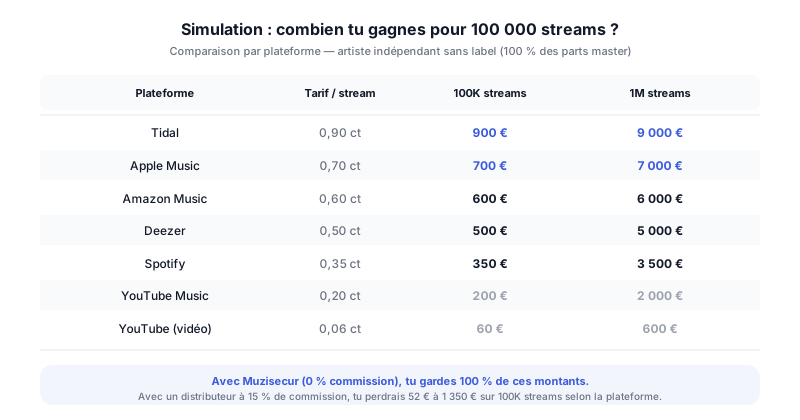
Simulation pour un artiste indépendant gardant 100 % de sa part master, les écarts entre plateformes sont énormes.
L’importance de la diversification
En réalité, tes streams ne viennent jamais d’une seule plateforme. Une répartition typique pour un artiste francophone en 2026 ressemble à ceci :
- Spotify : 45 à 55 % des streams
- Apple Music : 15 à 25 %
- Deezer : 10 à 20 % (plus élevé en France)
- YouTube Music : 5 à 10 %
- Autres (Amazon, Tidal, etc.) : 5 à 10 %
Pour un artiste avec 100 000 streams répartis selon ce schéma, les revenus master totaux se situent entre 380 et 480 euros. Ajoute à cela les droits SACEM (si tu es auteur-compositeur) et les droits voisins SCPP/SPPF (si tu es producteur), et tu arrives plutôt autour de 500 à 650 euros au total.
Combien de streams pour vivre du streaming
Soyons honnêtes : pour générer un SMIC mensuel (~1 400 € net) uniquement grâce au streaming, il te faudrait environ 300 000 à 400 000 streams par mois en moyenne, tous droits confondus. C’est beaucoup. C’est faisable, mais cela demande un catalogue conséquent, une stratégie de sorties régulières, et une fanbase active.
La plupart des artistes indépendants ne vivent pas exclusivement du streaming. Le streaming est un pilier parmi d’autres : concerts, synchro, merchandising, droits d’auteur, formations, production pour d’autres artistes. Le panorama complet est dans gagner de l’argent avec sa musique au-delà du streaming.
À retenir : Le streaming seul ne suffit généralement pas à faire vivre un artiste. Mais combiné à une bonne gestion des droits et à d’autres sources de revenus, il constitue un flux régulier et croissant, à condition de ne pas en perdre une partie inutilement.
Les revenus cachés que tu oublies peut-être
Beaucoup d’artistes indépendants se focalisent sur leurs revenus de distribution (la part master) et oublient qu’il existe d’autres flux directement liés au streaming.
Les droits d’auteur (SACEM)
Si tu es auteur et/ou compositeur de tes morceaux, la SACEM collecte des droits d’auteur directement auprès des plateformes de streaming. Ces revenus sont en plus de ta part master. Ils représentent environ 10 à 15 % du revenu total généré par tes streams.
Concrètement, les droits d’auteur pèsent environ 15 % du chiffre d’affaires des plateformes (étude GESAC 2022), soit 0,5 à 1,3 € les 1 000 streams pour l’ensemble des ayants droit de l’œuvre, avant frais SACEM (environ 7 % sur les droits en ligne à partir de 2026). Pour 100 000 streams, cela représente environ 50 à 130 euros à partager entre auteurs, compositeurs et éditeur (avec un délai de 6 à 12 mois, cadencé par le calendrier de répartition). Ce n’est pas énorme, mais sur un catalogue de 50 titres qui tournent régulièrement, ça s’accumule.
Les droits voisins (SCPP / SPPF)
Si tu es producteur de tes enregistrements (c’est-à-dire si tu finances la production de tes masters, ce qui est le cas de la plupart des artistes indépendants), tu as droit aux droits voisins. Ces droits sont collectés par la SCPP ou la SPPF et proviennent de la copie privée, de la diffusion radio, mais aussi, et de plus en plus, du streaming.
Le problème : beaucoup d’artistes indépendants ne sont pas inscrits à la SCPP ou à la SPPF, ou n’y ont pas déclaré leurs catalogues. Résultat : cet argent existe, il est collecté, mais il ne leur parvient jamais.
Les revenus YouTube Content ID
YouTube ne se limite pas à YouTube Music. Quand quelqu’un utilise ta musique dans une vidéo (un vlog, un tutoriel, un montage), le système Content ID peut détecter ton morceau et monétiser la vidéo à ton profit. C’est un flux de revenus passif qui peut être significatif si tes morceaux sont utilisés par des créateurs de contenu.
Encore faut-il que ton distributeur propose la monétisation Content ID, et que les métadonnées de tes morceaux soient correctement renseignées.
À retenir : La part master via ton distributeur ne représente qu’une partie de tes revenus potentiels. Droits SACEM, droits voisins SCPP/SPPF, Content ID YouTube : chaque flux compte, et les négliger, c’est littéralement jeter de l’argent par les fenêtres.
L’impact de la commission de ton distributeur
Tu connais maintenant les tarifs par stream. Mais ce que tu touches réellement dépend aussi de ce que prend ton distributeur au passage.
Distributeur à 0 ou 2 % de commission
Avec un distributeur qui ne prélève aucune commission sur tes revenus mais facture un abonnement annuel (comme DistroKid ou TuneCore dans leurs formules standard), tu gardes 100 % de ta part master. Sur 100 000 streams Spotify, tu touches tes 350 € en intégralité, abonnement à déduire. Chez Muzisecur, la distribution est incluse sans abonnement dédié, avec une commission de 2 % seulement sur les sommes nettes encaissées : sur ces mêmes 350 €, il t’en reste 343 €.
Distributeur à 9-15 % de commission
Avec un distributeur qui prend 9 % (CD Baby) à 15 % (RouteNote gratuit), le calcul change :
| Plateforme | 100K streams brut | Après 9 % | Après 15 % |
|---|---|---|---|
| Spotify | 350 € | 318 € | 297 € |
| Apple Music | 700 € | 637 € | 595 € |
| Deezer | 500 € | 455 € | 425 € |
| Total mixte | ~450 € | ~409 € | ~382 € |
Sur un single, la différence semble modeste. Mais multiplie par un catalogue de 20 titres sur 5 ans, et tu parles de centaines, voire de milliers d’euros qui s’évaporent en commissions.
Le vrai coût sur le long terme
Prenons un artiste qui génère 500 000 streams par mois en moyenne (un artiste indépendant avec un catalogue solide et une bonne stratégie). Ses revenus master annuels se situent autour de 25 000 €.
- Avec 0 % de commission : 25 000 € nets (abonnement annuel à déduire)
- Avec 2 % de commission (Muzisecur) : 24 500 € nets → 500 € de différence
- Avec 9 % de commission : 22 750 € nets → 2 250 € de perdu
- Avec 15 % de commission : 21 250 € nets → 3 750 € de perdu
Sur 5 ans, la commission à 15 % représente 18 750 euros partis chez le distributeur. C’est le prix d’un album entier en production professionnelle.
À retenir : une commission faible (0 à 2 %) n’est pas un détail marketing. Sur le long terme, c’est la différence entre un artiste qui réinvestit dans sa carrière et un artiste qui finance le distributeur.
Comment maximiser tes revenus de streaming
Tu ne peux pas contrôler le tarif par stream de Spotify. Mais tu peux agir sur tout le reste. Voici les leviers concrets.
1. Choisis un distributeur à faible commission
C’est le levier le plus immédiat. Si tu passes d’un distributeur à 15 % à un distributeur à 0 ou 2 %, tu augmentes tes revenus master de 15 à 18 % instantanément, sans rien changer à ta musique ni à ta stratégie.
2. Inscris-toi à la SACEM (si tu es auteur/compositeur)
Si tu écris tes textes ou composes tes mélodies, tu dois être inscrit à la SACEM et y déclarer chaque oeuvre. C’est un flux de revenus supplémentaire que tu n’as aucune raison de laisser passer.
3. Déclare ton catalogue à la SCPP ou à la SPPF
Si tu autoproduis ta musique, tu es producteur au sens juridique. Inscris-toi à la SCPP ou à la SPPF, déclare tes enregistrements et n’oublie pas ta déclaration annuelle des ventes. Tu recevras des droits voisins qui s’ajoutent à tes revenus de distribution.
4. Sors régulièrement
Les algorithmes de Spotify et Apple Music favorisent les artistes actifs. Un single tous les 4 à 6 semaines maintient ta visibilité dans les recommandations et dans Release Radar / New Music Mix. Les réglages qui plombent cette visibilité sont détaillés dans Spotify for Artists : les erreurs à éviter. Plus de visibilité = plus de streams = plus de revenus.
5. Travaille tes playlists éditoriales
Soumettre tes titres aux playlists éditoriales via Spotify for Artists (au moins 7 jours avant la sortie) est gratuit et peut changer la donne. Un placement en playlist éditoriale peut multiplier tes streams par 10 ou 100.
6. Construis une vraie fanbase
Le modèle UCPS de Deezer (et possiblement d’autres plateformes à l’avenir) récompense les artistes avec des fans fidèles qui écoutent activement. Mieux vaut 1 000 vrais fans qui écoutent ton album en boucle que 100 000 écoutes passives en playlist : c’est toute la logique de l’économie des superfans.
7. Diversifie tes plateformes
Ne mise pas tout sur Spotify. Apple Music paye deux fois plus par stream. Tidal paye presque trois fois plus. Encourage ton audience à t’écouter sur les plateformes les mieux rémunérées, sans pour autant abandonner Spotify, qui reste le principal canal de découverte.
8. Optimise tes métadonnées
Des ISRC corrects, des crédits complets (auteurs, compositeurs, producteur, interprètes), un UPC pour chaque release : tout cela garantit que les revenus arrivent au bon endroit. Des métadonnées mal renseignées = de l’argent qui se perd en route.
À retenir : Maximiser tes revenus streaming, ce n’est pas juste faire plus de streams. C’est s’assurer que chaque stream te rapporte le maximum : une commission minimale, tous les droits collectés, des métadonnées irréprochables.
Muzisecur : 2 % de commission et collecte de tous les flux
Chez Muzisecur, on a conçu notre service autour d’un constat simple : un artiste indépendant ne devrait pas avoir à choisir entre distribution, gestion des droits et accompagnement administratif. Tout devrait être intégré.
Distribution à 2 % de commission seulement
Ta musique est distribuée sur toutes les plateformes majeures (Spotify, Apple Music, Deezer, Amazon Music, Tidal, YouTube Music, et plus de 150 autres), sans abonnement dédié ni frais par sortie. On conserve seulement 2 % sur les sommes nettes encaissées : sur 1 000 € versés par les plateformes, tu touches 980 €.
Collecte des droits voisins
Muzisecur t’accompagne dans la déclaration et la collecte de tes droits voisins auprès de la SCPP et de la SPPF. Ce sont des revenus que la plupart des artistes indépendants ne touchent pas, simplement parce qu’ils ne savent pas qu’ils y ont droit ou ne savent pas comment les réclamer.
Gestion administrative complète
Au-delà de la distribution, Muzisecur gère tes contrats et mémo deals, tes adhésions et déclarations auprès de la SACEM, SCPP, SPPF, ADAMI et SPEDIDAM, ta déclaration annuelle des ventes, tes demandes de subventions (0 % de commission) et de Crédit d’Impôt Phono, tout le volet admin musical qui mange ton temps et ton énergie. Tu te concentres sur ta musique, on s’occupe du reste.
Catalogue et déclarations dans un seul endroit
Un espace unique pour tenir ton catalogue à jour, retrouver tes adhésions, suivre tes déclarations d’œuvres et tes demandes de subventions, sans avoir besoin d’éparpiller tes infos sur dix outils.
À retenir : Muzisecur ne se contente pas de distribuer ta musique. On s’assure que chaque euro qui te revient arrive effectivement dans ta poche, revenus master, droits voisins, tout. Et ça commence par ne rien te prélever au passage.
FAQ : revenus streaming 2026
Combien rapporte 1 million de streams sur Spotify en 2026 ?
Environ 3 500 euros en moyenne pour la part master seule (avant commission distributeur). Ce chiffre varie selon le pays d’écoute et le type d’abonnement des auditeurs. Ajoute les droits d’auteur (environ 500 à 1 200 € par million, ≈ 1 000 € si les écoutes sont françaises et payantes, à partager entre auteurs, compositeurs et éditeur) et les droits voisins éventuels pour un total plus complet.
Pourquoi Spotify paye moins qu’Apple Music ?
Principalement parce que Spotify a un tier gratuit financé par la publicité, qui rapporte beaucoup moins par stream qu’un abonnement payant. Apple Music n’a pas d’offre gratuite : chaque stream provient d’un abonné payant.
Le modèle UCPS de Deezer est-il meilleur pour les artistes indépendants ?
Oui, si tu as une fanbase fidèle qui t’écoute régulièrement. Le modèle UCPS rémunère en fonction des écoutes réelles de chaque abonné, pas d’un pot commun. Un artiste de niche avec des fans dédiés y gagne par rapport au modèle pro-rata classique.
Est-ce que les tarifs par stream augmentent ou baissent ?
La tendance globale est à la légère baisse du tarif par stream sur Spotify (hausse du nombre d’utilisateurs gratuits), mais à la hausse sur Apple Music et Deezer (augmentation des prix d’abonnement en 2025-2026). En valeur absolue, le marché du streaming continue de croître, donc les revenus totaux augmentent même si le tarif unitaire stagne.
Faut-il être inscrit à la SACEM pour toucher ses droits de streaming ?
Oui, si tu es auteur et/ou compositeur de tes morceaux. La SACEM collecte les droits d’auteur directement auprès des plateformes. Sans inscription, ces droits existent mais ne te parviennent pas. Si tu n’es qu’interprète de morceaux écrits par d’autres, la SACEM ne te concerne pas, mais les droits voisins (ADAMI) oui.
Comment savoir si mon distributeur prend une commission cachée ?
Lis les conditions générales en détail, et compare-les dans notre face-à-face DistroKid vs TuneCore vs CD Baby. Certains distributeurs affichent “0 % de commission” mais prélèvent des frais sur les retraits, facturent les stores additionnels, ou imposent des frais annuels de maintien en ligne. Vérifie aussi s’ils gardent un pourcentage sur les revenus YouTube Content ID.
Est-ce que le nombre d’écoutes nécessaires pour déclencher un paiement a changé ?
Spotify a introduit en 2024 un seuil minimal de 1 000 streams par an par titre pour déclencher un paiement : notre guide pour passer le cap des 1 000 streams devient donc un préalable financier. Les titres en dessous de ce seuil ne génèrent plus de revenus. C’est un changement important pour les artistes émergents avec un petit catalogue. Les autres plateformes n’ont pas (encore) adopté cette mesure.
Combien rapportent 1 000 streams en euros ?
Environ 3,50 € de part master sur Spotify (à ~0,35 centime par stream), et entre 1 € et 9 € selon la plateforme. À ce volume, les revenus restent symboliques : c’est à partir de plusieurs centaines de milliers de streams que les montants deviennent significatifs.
Combien d’euros valent 10 millions de streams ?
Environ 35 000 € de part master sur Spotify, et entre 10 000 € et 90 000 € selon la plateforme (de YouTube à Tidal). S’y ajoutent les droits d’auteur SACEM et les droits voisins, qui peuvent représenter 15 à 25 % de revenus supplémentaires si tes droits sont correctement collectés.
Conclusion
Le streaming en 2026, c’est un marché qui génère des milliards d’euros, mais où chaque artiste doit se battre pour que sa part lui revienne effectivement. Les tarifs par stream varient de 0,06 centime (YouTube vidéo) à 0,90 centime (Tidal), et ce que tu touches réellement dépend de ta chaîne de distribution, de ta gestion des droits, et de ta stratégie.
Les trois actions les plus rentables que tu puisses faire aujourd’hui :
- Passer à un distributeur à faible commission (0 à 2 %) pour garder l’essentiel de tes revenus master.
- Déclarer ton catalogue à la SCPP ou SPPF pour toucher tes droits voisins.
- Sortir de la musique régulièrement pour maintenir ta visibilité algorithmique.
Chez Muzisecur, on gère ces trois aspects pour toi : distribution à 2 % de commission seulement, collecte des droits voisins, et accompagnement administratif complet. Pour que tu puisses te concentrer sur ce qui compte vraiment, ta musique.
Et si tu veux replacer ces montants dans le marché français réel, les derniers chiffres officiels donnent l’échelle exacte : marché de la musique en France 2026, ce que le bilan du SNEP change pour un indé.
Articles similaires
Monétiser sa musique sur YouTube, TikTok et Instagram : Content ID, distribution sociale et revenus
Content ID, UGC, distribution sociale : découvre comment gagner de l'argent quand ta musique est utilisée sur YouTube, TikTok et Instagram en 2026.
Comment lire et comprendre un relevé de royalties de son distributeur
Streams, territoires, revenus bruts, taxes : comment décrypter chaque ligne de ton relevé de royalties distributeur et y repérer les erreurs.

Anghami : le guide complet 2026 pour artistes (distribution, royalties, marché MENA)
Distribuer sa musique sur Anghami, ce que paie vraiment la plateforme n°1 du monde arabe, et pourquoi elle dépasse Spotify chez nos artistes.