Monetizing Your Music on YouTube, TikTok, and Instagram: Content ID, Social Distribution, and Revenue

You release music, you post videos, you watch your streams slowly rise on Spotify or Deezer… but do you know that YouTube, TikTok, and Instagram can also earn you money? And not just a few cents: we’re talking about regular, stackable, and most importantly automatic revenue once the system is in place.
The problem is that most independent artists miss out on this revenue, either because they don’t know it exists, or because they haven’t activated the right settings with their distributor. The result: your music is used in thousands of TikTok videos, Instagram reels, YouTube vlogs… and you earn nothing.
In this article, we’ll break down how music monetization works on each platform, how much it actually pays, and most importantly how to set everything up so you stop leaving money on the table.
Why social media has become a revenue source
For a long time, social media was just a promotional tool. You posted content to get noticed, period. Today, social platforms have become genuine revenue sources for artists, for three reasons:
-
Advertising funds everything. YouTube, TikTok, and Instagram generate billions from advertisers. A portion of that money is redistributed to content creators — and therefore to musicians.
-
User-generated content (UGC) is exploding. Millions of videos are created every day with music in the background. Thanks to audio detection systems, rights holders can be automatically compensated.
-
Distributors have expanded their offerings. What was reserved for major labels 10 years ago (Content ID, social monetization) is now accessible to any independent artist through their distributor.
Key takeaway: social media is no longer just a promo tool. It’s a full-fledged revenue source that you need to activate and optimize, just like traditional streaming.
This is one of the 10 revenue sources every artist should set up to make a living from music. And the best part? As Tarik says in his video: YouTube literally pays you to grow your visibility. It’s the concept of self-liquidation — you get paid to do your own promo.
YouTube and Content ID: getting paid to grow your visibility
YouTube is the most generous platform for musicians, by far. It offers two complementary monetization mechanisms: AdSense (your channel) and Content ID (other people’s videos).
How Content ID actually works
Content ID is YouTube’s digital fingerprinting system. When you release a track through your distributor, they register a unique audio fingerprint of your song in the Content ID database. From that point on, every video uploaded to YouTube is automatically scanned and compared against this database.
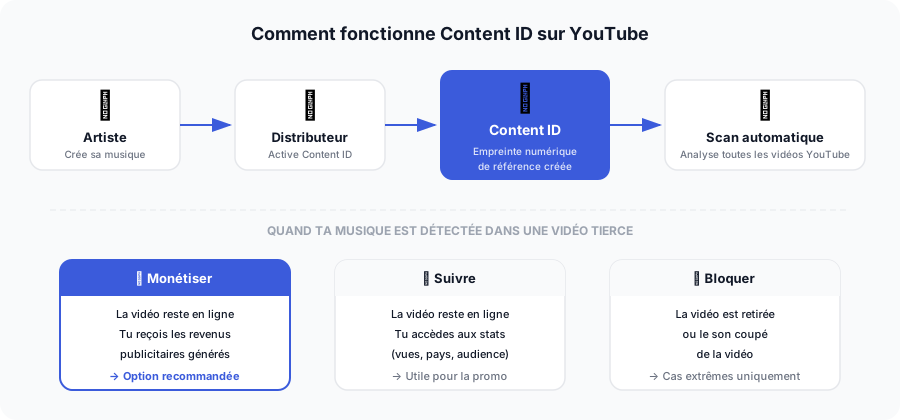 The complete Content ID circuit: from track creation to third-party video monetization.
When YouTube detects your music in a third-party video, three options are available to you:
- Monetize (recommended): the video stays online, but ad revenue goes to you. It’s a win-win strategy — the creator keeps their video, and you earn the money.
- Track: you don’t monetize, but you access analytics (views, countries, demographics). Useful if you want to understand how your music spreads.
- Block: the video is removed or the audio is muted. Reserve this for extreme cases (offensive use, massive piracy).
AdSense monetization: direct revenue
This is the revenue you generate on your own YouTube channel. Every view on your music videos, interviews, making-ofs, or live sessions generates ad revenue.
To access it, you need to join the YouTube Partner Program (requirements: 1,000 subscribers + 4,000 watch hours over 12 months, or 10 million Shorts views over 90 days).
Some reference points:
| Content type | Average RPM (revenue per 1,000 views) |
|---|---|
| Music video | 1 to 3 EUR |
| Tutorial / training | 3 to 8 EUR |
| Vlog / behind the scenes | 1.5 to 4 EUR |
| Interview | 2 to 5 EUR |
A music video that gets 500,000 views in a year can earn between 500 and 1,500 EUR. Multiply that by 10 videos and you potentially reach 5,000-15,000 EUR per year just from your YouTube content. And that’s on top of your regular streaming revenue.
Content ID: the most underrated indirect revenue
This is where things get really interesting. Content ID lets you monetize other people’s videos that use your music. And the volume can be enormous:
- A fan who puts your track in their vacation video
- A TikTok creator who reposts on YouTube with your song
- A vlogger who uses your beat as background music
- Compilations, reactions, covers…
Every video that uses your music becomes a passive revenue source. It’s exactly the same principle as neighboring rights: you earn money because your music is being exploited, with no additional effort on your part.
Key takeaway: Content ID turns every use of your music on YouTube into revenue. The more your music circulates, the more you earn — even (and especially) in videos you didn’t create yourself.
TikTok and Instagram: UGC monetization
What is UGC in music?
UGC (User-Generated Content) is when someone uses your music in their own video — an Instagram reel, a TikTok video, a Facebook story. Every time this happens and the platform detects your music, revenue is generated and paid to you through your distributor.
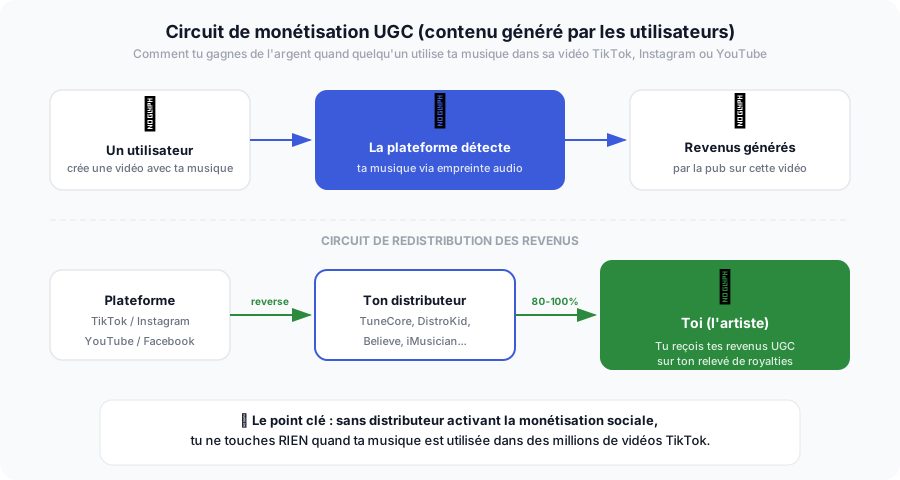 How your UGC revenue flows: from a user’s video to your royalty statement.
The potential is considerable: imagine a track you produced goes viral on TikTok. Tens of thousands of videos are created with your song. Even if each video only generates fractions of a cent, the volume more than makes up for it.
How to activate UGC monetization
To receive UGC revenue, you need to make sure your distributor offers social distribution (also called “social media distribution” or “social monetization”). In practice:
-
Choose a distributor that covers social media. Not all do, or not on all platforms. Verify that your distributor distributes to TikTok, Instagram/Facebook, and YouTube (Content ID).
-
Activate social monetization when you release. With some distributors, it’s automatic. With others, it’s an option to check (sometimes paid).
-
Never deactivate the UGC option. Some artists turn it off by mistake, thinking it prevents people from using their music. It’s the opposite: you want your music to be used — that’s how you earn money AND gain visibility.
| Platform | Monetization type | How it works |
|---|---|---|
| TikTok | UGC + Commercial sounds | Revenue when your music is used in videos |
| Instagram / Facebook | UGC via Meta | Audio detection in reels and stories |
| YouTube | Content ID + AdSense | Double monetization (your channel + third-party videos) |
| Snapchat | Sounds | Distribution via certain distributors |
To understand the copyright implications on these platforms, especially the difference between mechanical rights and sync rights, check our dedicated guide.
Revenue comparison by platform
Let’s talk numbers. Here’s what 1 million streams or views pays on average by platform in 2026:
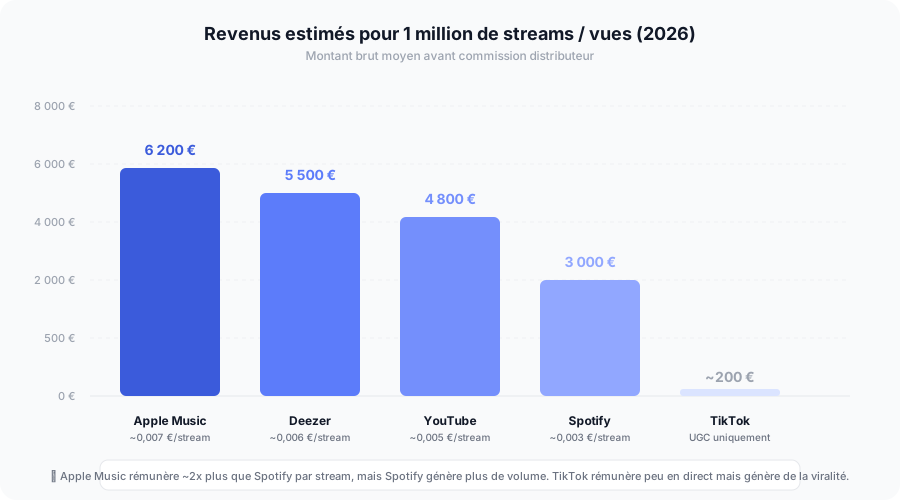 Estimated gross revenue for 1 million streams/views — before distributor commission.
| Platform | Revenue per 1M streams/views | Revenue per stream/view |
|---|---|---|
| Apple Music | ~6,200 EUR | ~0.007 EUR |
| Deezer | ~5,500 EUR | ~0.006 EUR |
| YouTube Music | ~4,800 EUR | ~0.005 EUR |
| Spotify | ~3,000 EUR | ~0.003 EUR |
| YouTube (AdSense/videos) | 1,000 - 5,000 EUR | Variable (RPM) |
| TikTok (UGC) | ~200 EUR | ~0.0002 EUR |
What to take away from this table:
- Apple Music pays the most per stream (~2x Spotify), but Spotify generates more volume thanks to its user base.
- YouTube is a double lever: you stack AdSense revenue (your channel) AND Content ID (third-party videos). It’s potentially the most profitable platform.
- TikTok pays very little directly, but its real power is virality. A viral TikTok sound can generate millions of streams on Spotify and Apple Music.
Key takeaway: don’t just look at revenue per stream. The winning strategy is to use TikTok for virality, YouTube for monetization, and streaming platforms for volume. All three are complementary.
The 5 mistakes that cost you money
1. Not activating Content ID with your distributor
This is the most common and most costly mistake. If Content ID isn’t activated, all YouTube videos using your music earn you nothing. Check your distributor settings immediately.
2. Choosing a distributor that doesn’t cover social media
Some basic aggregators only offer distribution to audio streaming platforms (Spotify, Apple Music, Deezer). They don’t cover TikTok, Instagram, or Content ID. You’re losing a significant portion of your potential revenue. To choose well, check our distributor comparison.
3. Disabling UGC monetization out of fear
Some artists think UGC “gives away” their music for free. That’s wrong. UGC pays you AND increases your visibility. Disabling this option means refusing to be paid for your own promotion.
4. Not monetizing your YouTube channel
If you post videos and content on YouTube without being in the Partner Program, you’re missing out on direct revenue. Even with a modest audience (10,000 views per video), it adds up over the year.
5. Ignoring metadata and credits
Poorly filled metadata (different artist name, missing ISRC, incorrect credits) prevent Content ID from linking your music to videos that use it. Make sure your ISRC code is correctly assigned to each track.
Complete strategy to maximize your revenue
Here’s a concrete action plan to get the most out of each platform:
Step 1 — Check your distributor
Log in to your distributor dashboard and verify that the following options are activated:
- YouTube Content ID
- TikTok distribution
- Instagram / Facebook (Meta) distribution
- UGC monetization
If your distributor doesn’t offer all of these, consider switching.
Step 2 — Join the YouTube Partner Program
If you’re not in yet, work toward your 1,000 subscribers and 4,000 watch hours. Post regularly: music videos, acoustic sessions, studio vlogs, reactions, behind-the-scenes… Each content type generates revenue.
Step 3 — Produce content designed for each platform
Don’t just post the same video everywhere. Adapt your content:
- YouTube: maximum quality videos + long-form content (live, interviews, making-of)
- TikTok: 15-60 second clips, highlights, teasers, trends
- Instagram: reels featuring the catchiest hooks from your tracks
Step 4 — Encourage UGC
The more your music is used by others, the more you earn. Create challenges, trends, easily usable sounds. Make your music available in each platform’s sound library.
Step 5 — Stack with your other revenue sources
Social media revenue doesn’t replace your other sources. It adds to your copyright (SACEM), neighboring rights, booking, merchandising, and royalties. The goal is to have at least 10 revenue lines coming in regularly.
If you need help structuring all of this — setting up your distribution, activating Content ID, declaring your rights with the right organizations — that’s exactly what Muzisecur does. We simplify all the administrative and legal work so you can focus on your music.
FAQ: music monetization on social media
What is Content ID on YouTube?
Content ID is YouTube’s automated system that identifies your music when it’s used in third-party videos. It lets you monetize those videos (receive ad revenue), track usage statistics, or block the content. You access it through your distributor.
How do you activate Content ID as an independent artist?
You can’t access Content ID directly. You need to go through a distributor that offers this service (TuneCore, DistroKid, iMusician, Believe, etc.). Your distributor registers your tracks’ audio fingerprint in YouTube’s Content ID database.
How much does 1 million views on YouTube pay an artist?
On average, 1 million YouTube views pay between 1,000 and 5,000 EUR depending on the topic, audience country, and content type. Music videos typically fall around 1,500 to 3,000 EUR. On top of that, you get Content ID revenue if your music is reused elsewhere.
Does TikTok pay artists when their music is used?
Yes, but indirectly. When a TikTok user uses your music in their video, you can earn UGC revenue through your distributor. Amounts are small per video (~0.0002 EUR per use), but volume can make up for it if your music goes viral.
Which distributor should you choose to maximize social media revenue?
Choose a distributor that offers YouTube Content ID, TikTok/Instagram monetization, and keeps a reasonable percentage (80 to 100% for the artist). Compare offers based on your release volume and specific needs.
What’s the difference between AdSense monetization and Content ID?
AdSense pays you for ads shown on YOUR YouTube channel. Content ID pays you when your music is used in OTHER creators’ videos. Both are stackable and complementary — and that’s what makes YouTube the most complete platform for musicians.
Conclusion
Monetizing your music on social media isn’t a bonus: it’s a full-fledged revenue source you need to set up right now. Between Content ID on YouTube, UGC on TikTok and Instagram, and direct channel monetization, you have three complementary levers working for you 24/7.
The most important thing is to verify that everything is properly activated with your distributor and to produce content tailored to each platform. Once the system is in place, every video that uses your music — whether it’s yours or a fan’s — becomes a micro-revenue that accumulates over time.
And remember: this revenue doesn’t replace your other sources (streaming, rights, booking, merch). It adds to them. The goal is to build a diversified and resilient revenue ecosystem — exactly what we help you put in place at Muzisecur.
Related articles

How Much Does a Stream Pay on Spotify, Apple Music, Deezer in 2026?
Real streaming figures in 2026: how much each platform pays per stream, why it varies, and how to maximize your revenue as an independent artist.

How to Transfer Your Catalog to a New Distributor Without Losing Streams
Switch distributors without losing your streams, playlists, or Spotify history. The full procedure, pitfalls to avoid, and ideal timing for a safe migration.

Digital Distribution Comparison 2026: DistroKid, TuneCore, CD Baby, Ditto & More
Which digital distributor should you pick? An honest comparison of DistroKid, TuneCore, CD Baby, Ditto, iMusician, RouteNote, LANDR, Amuse, UnitedMasters.