Make a Living from Music: The Complete Income Guide for Independent Artists

“I want to make a living from my music.” That is the sentence every artist says at some point. It is also the one that generates the most doubt, frustration, and misconceptions. You have been told it is impossible without a label. That streaming pays nothing. That only top artists make it. And yet, you see independents around you living comfortably from their art — without being superstars.
The truth is that making a living from music in 2026 is more accessible than ever. The French recorded music market reached 1.071 billion euros in 2025 according to SNEP, growing for the tenth consecutive year. Streaming represents 702 million euros, vinyl is booming with +15% growth, and SACEM collected 1.6 billion euros in copyright royalties in 2024. The money is flowing. The question is not whether there is enough — it is whether you know how to claim it.
This article is a complete, practical guide. We will review all the income streams available to an independent artist, with real numbers, actionable strategies, and the mistakes that cost you money every month.
Can you really make a living from music in 2026?
Yes. But not just any way.
The myth of the broke musician persists because it was largely true under the old model. Before streaming, an artist had two options: sign with a label (and give up 80-85% of master revenue) or stay independent with no access to distribution. Today, the game has changed radically.
What has changed:
- Digital distribution is accessible to everyone. You can put your music on Spotify, Apple Music, and Deezer for a few euros a month, without a label.
- Collective rights (SACEM, ADAMI, SPEDIDAM, SCPP/SPPF) are open to independents and represent significant revenue that many overlook.
- Live performance has become more accessible with small venues, emerging festivals, and showcases.
- Synchronization (placement in ads, films, series) has become an accessible market thanks to online sync platforms.
- Merch and content (YouTube, courses, coaching) create additional revenue without depending on a third party.
The problem is that most independent artists only know one or two of these sources. They accumulate streams on Spotify, see 35 euros for 10,000 plays, and think it is hopeless. When in reality, streaming is just one piece of the puzzle — and often not the most profitable one.
Key takeaway: An artist who makes a living from music in 2026 combines on average 3 to 5 different income sources. None is sufficient alone. But together, they build a stable and growing income.
The 7 income streams for independent artists
Here is the overview. Each source will be detailed in the following sections.
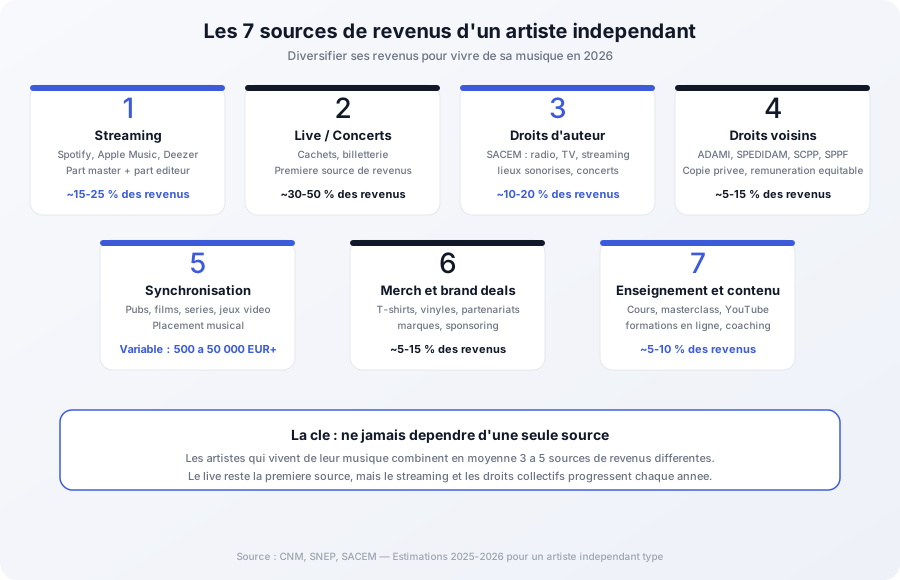
The 7 financial pillars of a viable independent music career.
| Source | Revenue type | Potential | Recurrence |
|---|---|---|---|
| Streaming | Master share + publisher | Medium | Monthly |
| Live / Concerts | Performance fees, tickets | High | Per date |
| Copyright (SACEM) | Royalties | Medium to high | Quarterly |
| Neighboring rights (ADAMI/SCPP) | Royalties | Medium | Annual |
| Synchronization | Flat fee + royalties | Variable (high) | One-off |
| Merch / Brand deals | Direct sales | Medium | Variable |
| Teaching / Content | Services | Medium | Recurring |
The strength of this model is that some sources are active (you must work for every euro: concerts, lessons) and others are passive (your copyright and neighboring rights come in automatically once the paperwork is done). The goal: maximize passive income so your time is dedicated to creation.
Copyright and neighboring rights: your passive income
This is the most underestimated pillar — and often the most profitable in the long run. Many independent artists are not registered with the right organizations, or do not declare their works properly. Result: thousands of euros go unclaimed every year.
Copyright via SACEM
If you compose the music and/or write the lyrics of your songs, you are a songwriter-composer. By registering with SACEM, you receive a royalty every time your work is:
- Broadcast on radio or TV
- Streamed on Spotify, Apple Music, Deezer (author share, separate from master share)
- Played at a concert (even your own)
- Played in a public venue (bar, restaurant, shop)
- Used in synchronization (ad, film, series)
In 2024, SACEM collected 1.6 billion euros for its 238,000 members, including 650 million from streaming. Streaming has become the top collection source, ahead of audiovisual broadcasting.
To understand the full mechanism, check out our article on music copyright.
Neighboring rights: ADAMI, SPEDIDAM, SCPP, SPPF
Neighboring rights are a second revenue stream, completely separate from copyright. They compensate:
- The performer (the one who sings or plays) via ADAMI or SPEDIDAM
- The phonogram producer (the one who funds the recording) via SCPP or SPPF
If you are an independent artist who self-funds your recordings, you are both performer AND producer. You are therefore entitled to both types of neighboring rights.
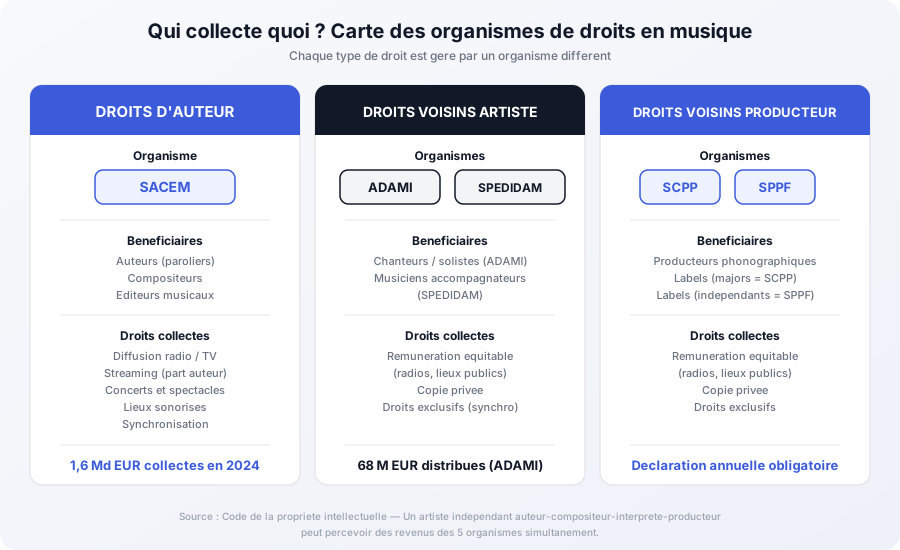
Each organization collects a specific type of right. A fully independent artist can receive revenue from all 5 organizations.
Neighboring rights consist of three streams:
- Equitable remuneration — collected from broadcasts on radios, bars, and shops
- Private copying — a levy on blank media (USB drives, smartphones, hard drives)
- Exclusive rights — secondary uses (compilations, sync)
ADAMI distributed 68 million euros to 121,758 artists in 2024. If you are not registered, your share goes back into a common pool. You lose it permanently after a few years.
Key takeaway: If you are a songwriter-composer-performer who self-produces, you should be registered with SACEM + ADAMI (or SPEDIDAM) + SCPP (or SPPF). That is three registrations for five types of revenue. Not doing it means giving up hundreds or thousands of euros per year.
Do not forget the annual sales declaration to SCPP or SPPF either — it is the step everyone forgets, and it determines the amount of your producer neighboring rights.
Streaming: how many streams do you need to live on?
Streaming is the most visible income source, but also the most misunderstood. For an independent artist in 2026, here are the rough figures:
| Platform | Average rate per stream |
|---|---|
| Tidal | ~0.90 cent |
| Apple Music | ~0.70 cent |
| Amazon Music | ~0.60 cent |
| Deezer | ~0.50 cent |
| Spotify | ~0.35 cent |
| YouTube Music | ~0.20 cent |
For a detailed platform-by-platform analysis, check out our article How much does a stream pay on Spotify, Apple Music, Deezer in 2026.
The concrete simulation
If you aim for a revenue of 2,000 euros per month solely from streaming (which is not the recommended strategy), you would need approximately:
- 570,000 streams/month on Spotify alone
- 285,000 streams/month on Apple Music alone
- A realistic mix: about 400,000 streams/month across all platforms
That is a lot. But remember: these figures concern only the master share (what your distributor pays you). In parallel, those same streams also generate SACEM copyright royalties — a second stream you receive separately if you are registered.
Why streaming still matters even though it pays little
Streaming is not just a direct income source. It is also:
- Your business card — concert and festival bookers look at your stats
- A SACEM royalty generator — each stream also generates separate copyright royalties
- A sync catalyst — music supervisors discover music on streaming platforms
- An asset that works over time — a catalog of 50 tracks generates streams even when you are doing nothing
Your choice of distributor is crucial: the commission they take (0 to 30% depending on the platform) directly impacts your net revenue. Compare the options in our digital distribution comparison.
Key takeaway: Never bet everything on streaming. But do not neglect it either. It is the fuel that feeds several other income sources.
Live: still the top income source
Despite the rise of streaming, live remains the number one income source for the majority of independent artists. And unlike streaming, it is a source where you earn significant amounts per unit.
The different formats
| Format | Typical fee (independent) | Realistic frequency |
|---|---|---|
| Open mic / Opening act | 0 – 200 EUR | Weekly |
| Small venue (50-200 capacity) | 200 – 800 EUR | 2-4x/month |
| Medium venue (200-1000 capacity) | 800 – 3,000 EUR | 1-2x/month |
| Festival (small stage) | 1,000 – 5,000 EUR | Seasonal |
| DJ set / Showcase | 300 – 2,000 EUR | Variable |
An independent artist who plays 3 to 4 dates per month at an average fee of 600 euros already generates 1,800 to 2,400 euros per month from live alone. Add SACEM royalties (venues pay royalties on every concert), and you reach a comfortable income.
How to grow your live activity
- Build a booking package: bio, professional photos, streaming links, live videos
- Target the right venues: start with SMAC venues (Scènes de Musiques Actuelles), music-programming bars, and emerging festivals
- Declare your concerts to SACEM: every declared setlist generates copyright royalties
- Sell merch on-site: margins are far better than streaming
Live is also the best way to build a loyal fanbase — the one that will buy your vinyl, your merch, and stream your tracks organically.
Sync, brand deals, and other income
Synchronization: the independent’s jackpot
Synchronization (or “sync”) is the placement of your music in audiovisual content: advertising, film, TV series, video games, podcasts. It is often the most underused income source for independents — and potentially the most lucrative.
Rates vary enormously:
| Placement type | Price range |
|---|---|
| YouTube video / Podcast | 50 – 500 EUR |
| Local / Web advertising | 500 – 5,000 EUR |
| TV series / Independent film | 1,000 – 15,000 EUR |
| National TV advertising | 5,000 – 50,000 EUR+ |
| International film / AAA video game | 10,000 – 100,000 EUR+ |
To maximize your chances, make sure your tracks are easily licensable: you must be the sole rights holder (or have clear split sheets with your collaborators), and your metadata must be impeccable (ISRC codes, full credits).
Brand deals and partnerships
With an engaged audience on social media, you can monetize your visibility through brand partnerships. This is not reserved for artists with millions of followers — niche brands (instruments, DAW software, streetwear) actively seek micro-influencers with 5,000 to 50,000 followers.
Merchandising
Merch is often overlooked by emerging artists, but it is a high-margin income source. A t-shirt that costs you 8 euros to produce sells for 25-30 euros. A vinyl pressed at 8 euros per unit sells for 20-30 euros. At concerts, conversion rates are much better than online.
Teaching and content creation
If you have mastered an instrument, production, or mixing, you can create significant supplementary income:
- Private lessons: 30-80 EUR/hour
- Online courses: passive income via platforms like Udemy or your own site
- YouTube channel: ad monetization + visibility
- Artist coaching: mentoring emerging artists
Legal status: sole trader, company, or association?
To collect your income legally, you need a legal status. It is a topic many artists put off, but it determines your taxation, social protection, and credibility with bookers.
The three main options
1. Sole trader (micro-enterprise)
- Pros: Set up in 10 minutes, simplified accounting, reduced social charges (~22%)
- Cons: Revenue cap at 77,700 EUR/year (services), no expense deductions
- Ideal for: Beginner to intermediate artist, income under 30,000 EUR/year
2. Company (SASU, EURL, SAS)
- Pros: Expense deductions (studio, equipment, travel), stronger credibility, no revenue cap, access to the Phonographic Tax Credit (CIPP)
- Cons: Mandatory accounting, setup and management costs, higher social charges
- Ideal for: Artist/producer with revenue above 30,000 EUR/year, or those wanting to structure a label
3. Association (loi 1901)
- Pros: No corporate tax (under certain conditions), access to grants and subsidies, collective framework
- Cons: No direct compensation for the founder (unless employed), administrative management, less flexibility
- Ideal for: Artist collectives, non-profit cultural projects
Intermittent performer status
If you complete at least 43 performance fees (or 507 hours) over 12 months in live performance or recording, you can qualify for intermittent performer status (intermittent du spectacle). This status gives you access to unemployment insurance between contracts — a valuable safety net.
Note: intermittent status applies to employees of the performing arts. You cannot be a sole trader AND intermittent on the same activity. Your performances must be invoiced by an employer (venue, producer, association) who declares you on a short-term employment contract (CDD d’usage).
Key takeaway: The choice of legal status depends on your income level and situation. Below 30,000 EUR/year, the sole trader structure is often the simplest. Above that, a company becomes more tax-efficient thanks to expense deductions.
Tarik Hamiche’s take
“I have produced artists who achieved gold and platinum records in total independence. And I can tell you one thing: music is not just an art. It is also a business. And like any business, you must master your revenue streams. Talent is not enough — you need to register with the right organizations, declare your works correctly, choose the right distributor, protect your rights. The artists who make a living from their music are not necessarily those with the most streams. They are those who leave no money on the table. That is precisely why I created Muzisecur: so that every independent artist can focus on creating, while all the administrative side — contracts, rights, distribution, declarations — is handled properly, without forgetting anything.”
— Tarik Hamiche, multi-certified gold and platinum producer, founder of Muzisecur, author of Le Secret pour Vivre de sa Musique
FAQ: making a living from music
How much does an independent artist earn in France?
Earnings vary widely. A beginner who only streams might earn a few dozen euros per month. A well-structured independent artist with 3 to 5 active income streams (live, streaming, collective rights, sync, merch) can generate between 2,000 and 10,000 euros per month. The key is diversification and administrative rigor.
Do you need a label to make a living from music?
No. In 2026, digital distribution is accessible to everyone, and collective rights are open to independents. A label can bring funding, a network, and marketing power, but it is no longer a prerequisite. Many independent artists earn more than signed ones because they keep 100% of their masters. Check out our article on artist contract vs license deal to weigh the pros and cons.
What are the first steps to monetize your music?
- Register with SACEM to collect your copyright royalties
- Register with ADAMI or SPEDIDAM for your performer rights
- Register with SCPP or SPPF for your producer rights
- Choose a competitive digital distributor
- Start playing live and building your fanbase
Is streaming enough to make a living from music?
For the vast majority of artists, no. You would need roughly 400,000 streams per month across all platforms to earn 2,000 euros gross — and that is before the distributor’s commission. Streaming is an important pillar, but it must be complemented by live, collective rights, and other sources. Find all the numbers in our article on streaming revenue in 2026.
How do you protect your rights as an independent?
Protection involves several actions: registering your works with SACEM, drafting split sheets for every collaboration, using featuring contracts systematically, and assigning a unique ISRC code to each recording.
Conclusion
Making a living from music in 2026 is possible. But it does not happen by hoping your streams will blow up overnight. It is a methodical construction effort: multiply your income sources, register with the right organizations, structure your activity legally, and above all, do not leave money on the table out of ignorance or administrative laziness.
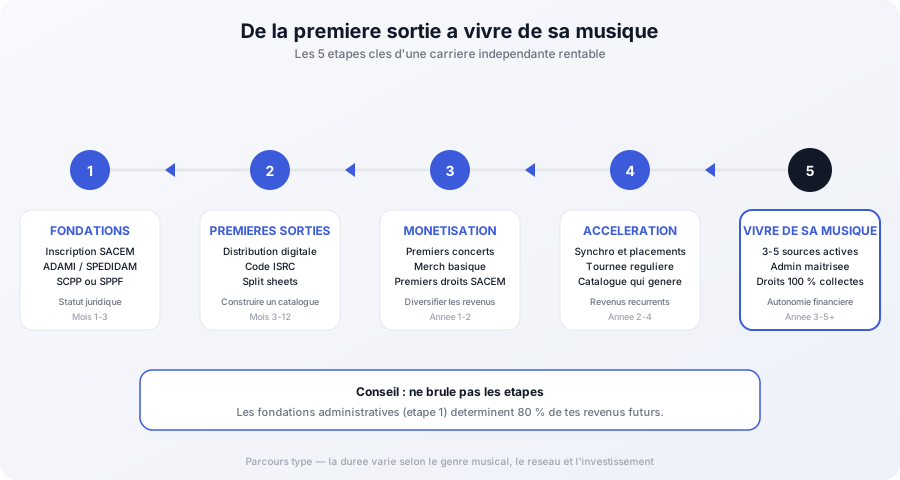
The 5 key steps to building a profitable independent music career.
The artists who succeed are not necessarily the most talented. They are those who treat their music as a professional project: they know their rights, they diversify their income, they surround themselves with the right people, and they automate everything that can be automated.
If all of this feels overwhelming, that is normal. That is exactly why Muzisecur exists: to centralize and manage all the administrative side of your career — contracts, rights, distribution, declarations — so you can focus on what you do best: creating music.
Related articles
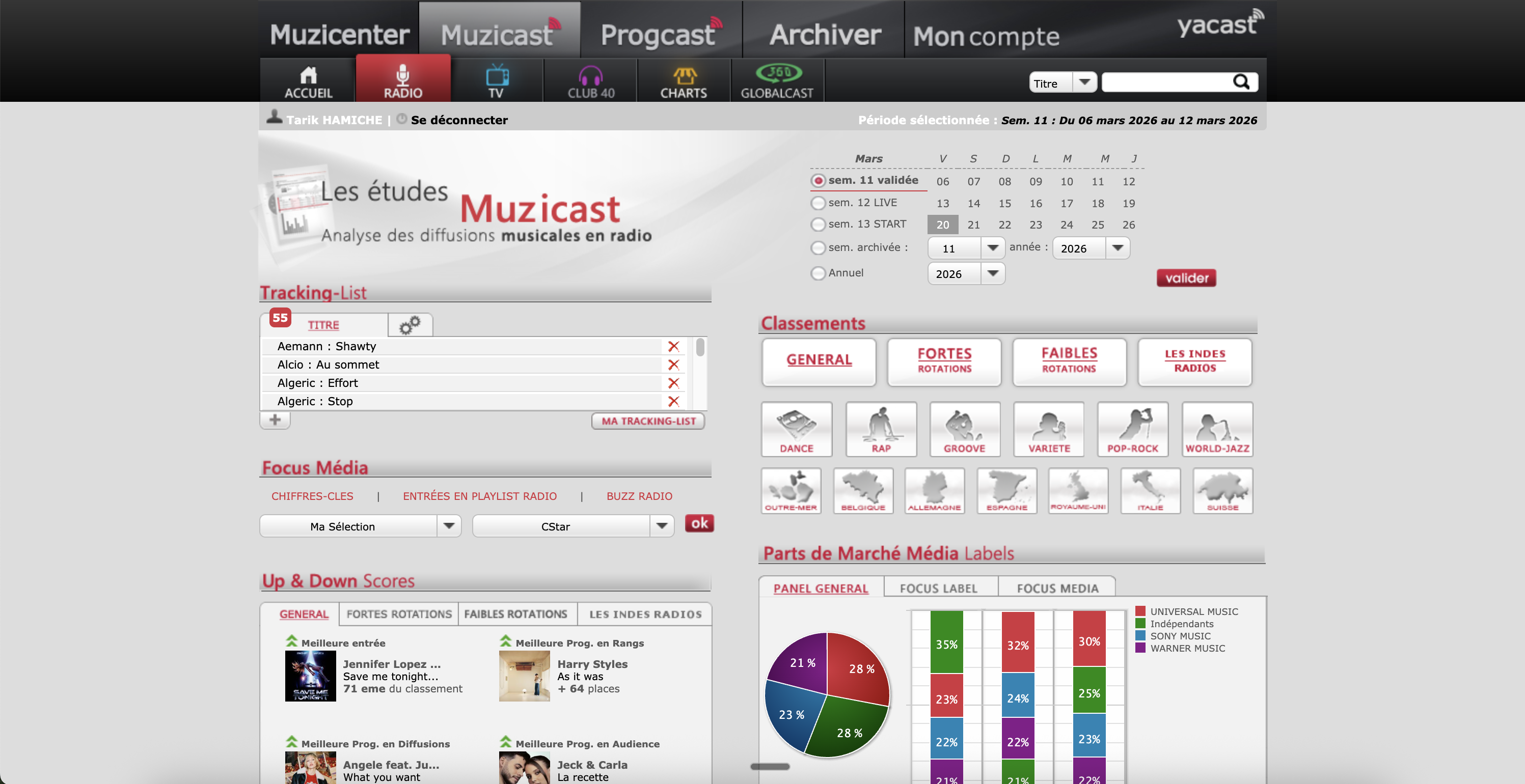
Getting on Radio Playlists: The Complete Guide for Independent Artists
How to get on radio playlists as an independent artist. Rotation mechanics, French quotas, Muzicenter, press agents: everything you need to know.

Monetizing Your Music on YouTube, TikTok, and Instagram: Content ID, Social Distribution, and Revenue
Content ID, UGC, social distribution: learn how to earn money when your music is used on YouTube, TikTok, and Instagram in 2026.

Cover Songs: What Rights, Permissions, and Royalties Apply?
Covering a song in France involves specific rights. This guide details the permissions, licenses, and royalties for every platform.